
Robert De Niro’s $250m hotel – on Princess Diana’s favourite beach
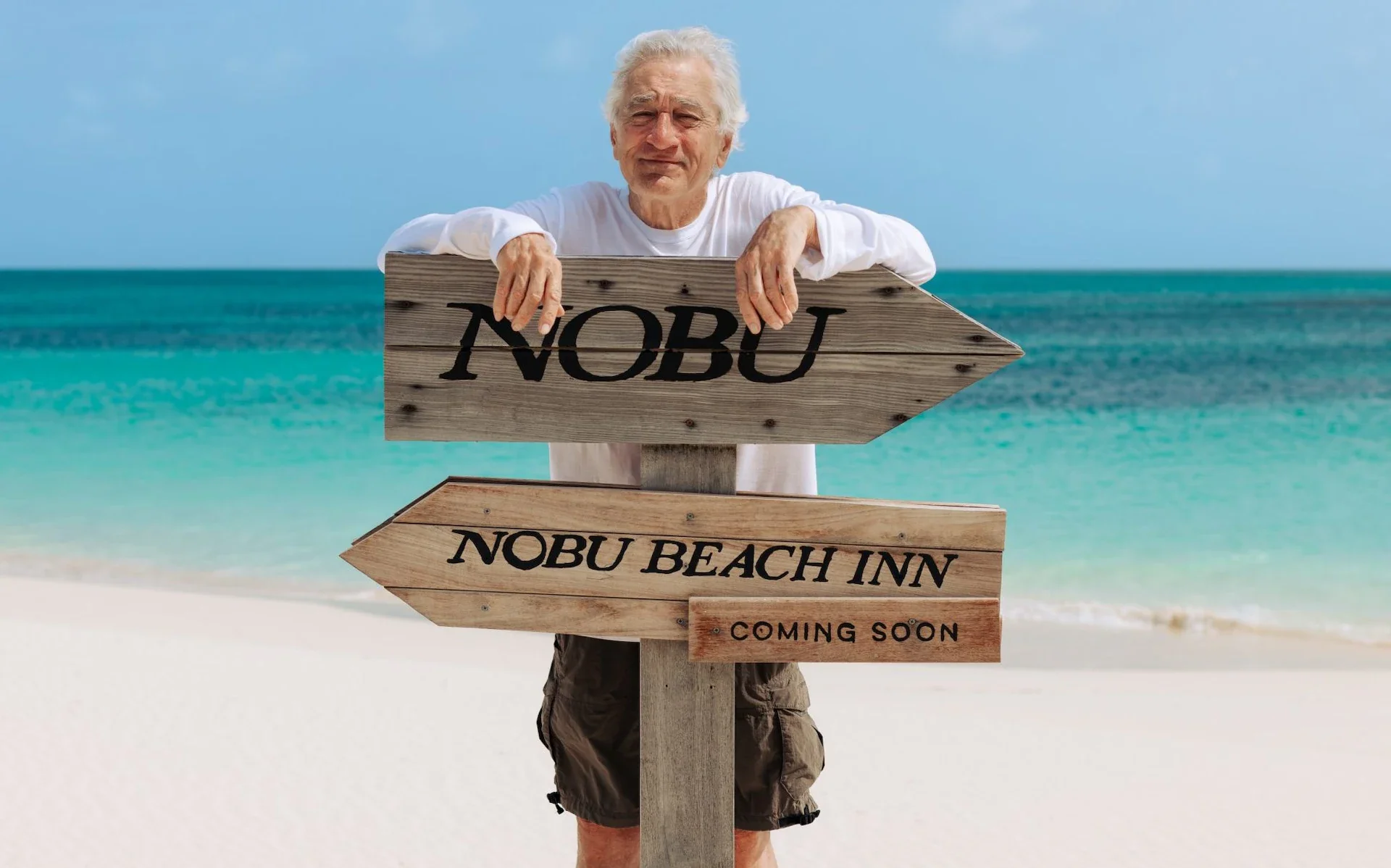
Robert De Niro on the Caribbean island of Barbuda, where his luxurious Beach Club Barbuda will be ready to open in early2026
The Hollywood actor explains why he’s building the latest outpost of his high-end hospitality empire in the Caribbean.
When Hurricane Irma swept across the Caribbean island of Barbuda in 2017, it left a scene of destruction. Almost every building was devastated, and all 1,600 residents were forced to evacuate to neighbouring Antigua for up to a year. Yet a box of tissues sitting on the kitchen table in Robert De Niro’s beachfront home survived unscathed.
The 82-year-old actor – Bob, as he asks to be called – gives a familiar raised eyebrow and low-key chuckle at the bizarre incongruity of it all. “Barbuda was levelled, pretty much. In my house, the ocean had pushed the furniture into the living room and out the back window into the back yard. And then, oddly enough, there was a little table with a box of tissues that had not been touched. You see that with these disasters, where things are spared for some weird reason,” recalls a relaxed De Niro, casually dressed in a white T-shirt (the rest is obscured by his laptop), as he speaks on Zoom early one Saturday morning from his home in upstate New York.
For a man worth an estimated $500m (£367m) – amassed from both a six-decade film career (that shows no sign of slowing down) and a juggernaut of a hotel, hospitality and property empire that includes co-ownership of the $1bn Nobu brand – his Barbudan home is relatively modest. “It’s very simple, just a one-level beach house with a couple of guest rooms connected to it,” he says of his cottage, the white walls of which match the sugar-fine sand that surrounds it, its turquoise-framed verandas echoing the electric blue of the ocean just out front.
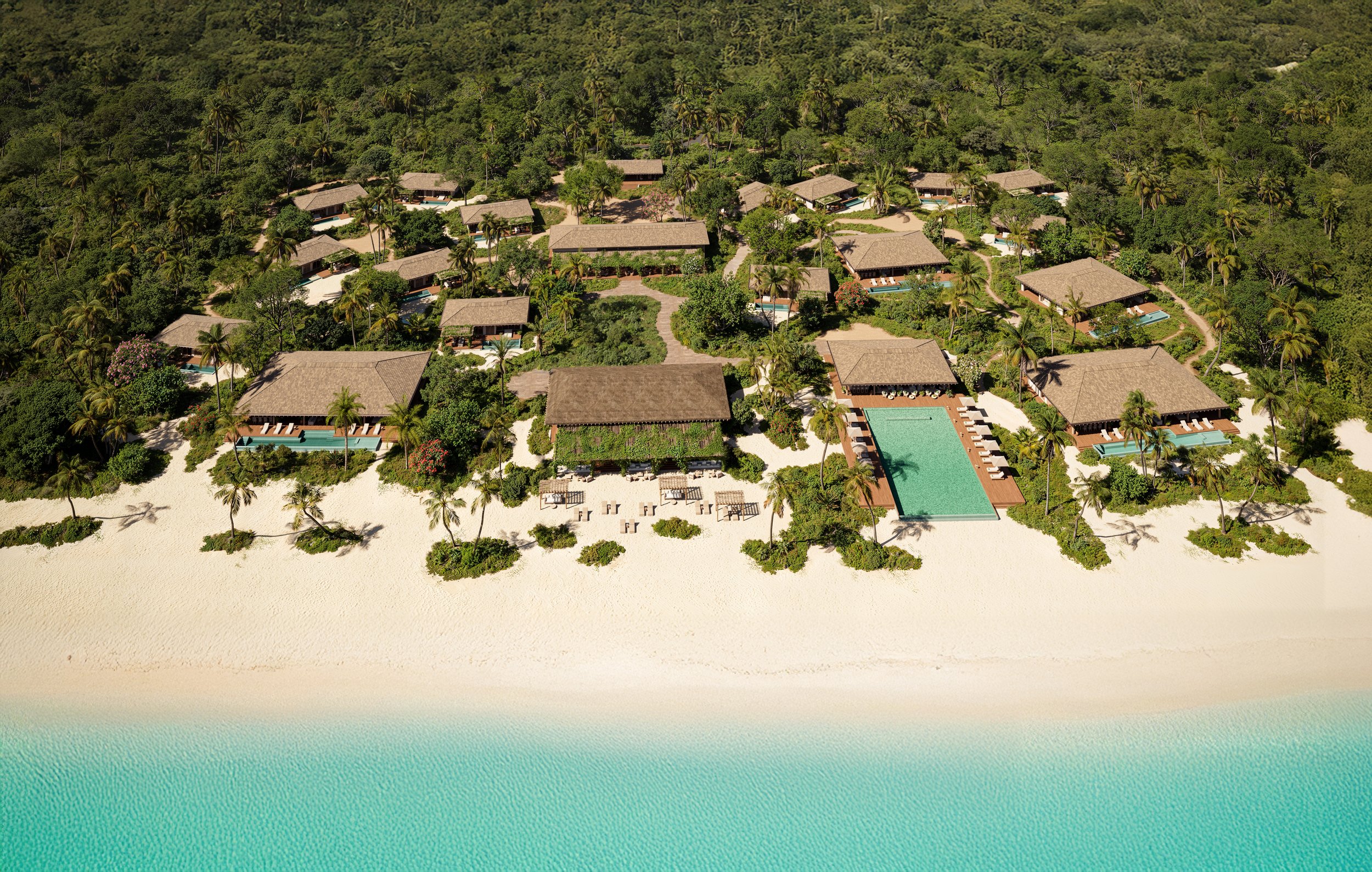
An architect’s rendering of the Nobu Beach Inn | Source: Nobu Beach Inn
There is little else in sight for miles on this flat and sparsely populated island peppered with mangroves and lagoons. But this secluded spot on Princess Diana Beach – so named as the princess frequently sought sanctuary at the K Club resort that once stood on the site – has captivated De Niro ever since he stumbled across it 30 years ago.
“I came on a boat from Antigua for lunch one day and I didn’t even know what the island was, but I never forgot the beach. It was just beautiful. I thought that if I ever did a resort, this could be the place,” he says.
Then, in 2014, his dream came true: the K Club site became available. He and his business partner, the Australian billionaire James Packer, took over the lease for the 400-acre site, and De Niro renovated a cottage that had belonged to the club’s architect for his own use when visiting the island.
After Irma struck, he patched it up again, “in exactly the same way that it was”, he says. Soon, though, he will finish the demolition job that the category-five hurricane didn’t quite complete, as he is bulldozing the cottage to build himself a new home in the same spot.
It will still be simple, he insists, just “with a few extra bedrooms, a pool and a tennis court” – a sport he plays well enough, he says, “to still want to play”.
“I’ll spend as much time there as my schedule allows, always with members of my family, who love it there too,” he adds, having recently returned from a holiday there with his 46-year-old partner, Tiffany Chen, a martial arts instructor and actor, and their two-year-old daughter, Gia – the youngest of De Niro’s seven children from four different relationships.
But his new home will no longer sit in such blissful isolation, as it will soon form part of The Beach Club Barbuda, the $250m resort that De Niro is building with Packer and the British entrepreneur Daniel Shamoon, whom he met seven years ago when opening the Nobu restaurant at one of Shamoon’s hotels, the star-studded Puente Romano in Marbella, Spain.
Set along two miles of beautiful, largely untouched seafront, The Beach Club will include Nobu Beach Inn, a hotel with accommodation set in 17 villas of up to 6,000 sq ft, due for completion in early 2026. Each villa will have its own private beach garden featuring outdoor showers and ice baths and amenities ranging from watersports to an omakase sushi bar.
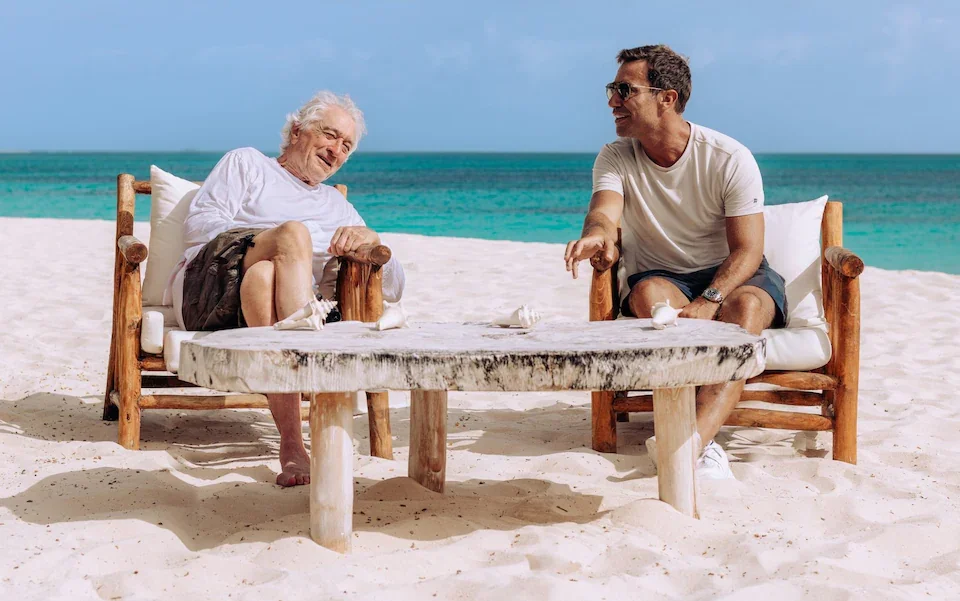
De Niro met Daniel Shamoon, right, a British entrepreneur, when he opened a Nobu restaurant at one of Shamoon’s hotels
Lining the beachfront are 25 private villas serviced by Nobu Beach Inn. Priced from $12m (£8.8m), they come fully furnished and are customisable with home cinemas, wine cellars or whatever the buyer desires. “This is hassle-free Caribbean living. When you arrive, your clothes will be hanging up, your lychee martini poured,” says Shamoon, 50, who bears a passing resemblance to James Blunt, all boyish looks and expensive-education voice. In between wakeboarding and doing business deals from his speedboat, he has joined the Zoom call from the Hermitage Bay resort he owns in Antigua.
There are also 30 Beach Club plots for sale, of up to 5½ acres each, priced from $7m. And already up and running since 2020 is the Nobu Barbuda restaurant – a relaxed, toes-in-the-sand affair where the dress code, unofficially, is bikini – serving the global brand’s staples such as black cod miso (De Niro’s favourite) to the jet set who have stumbled across this desert island. “One of my most favourite moments is my daily walk along the beach from my house to Nobu and back,” says the actor.
While The Beach Club Barbuda is still a construction site, some diners come from the island’s sole other luxury resort, Discovery Land’s Barbuda Ocean Club, farther along the beach. Others drop in for lunch by helicopter from Antigua, a 10-minute hop away. But there’s a third way for those who want the more immersive approach, and that’s to arrive by speedboat – which, in the absence of a jetty, requires slipping neck-deep into the bath-warm sea and emerging, Ursula Andress-like, from the waves.
“That’s how we want everyone to arrive, jumping off the boat into the water,” De Niro says, smiling, “though it can be a little rough going over. I can do it, but whoever is with me, it’s tough to put them through it too.”
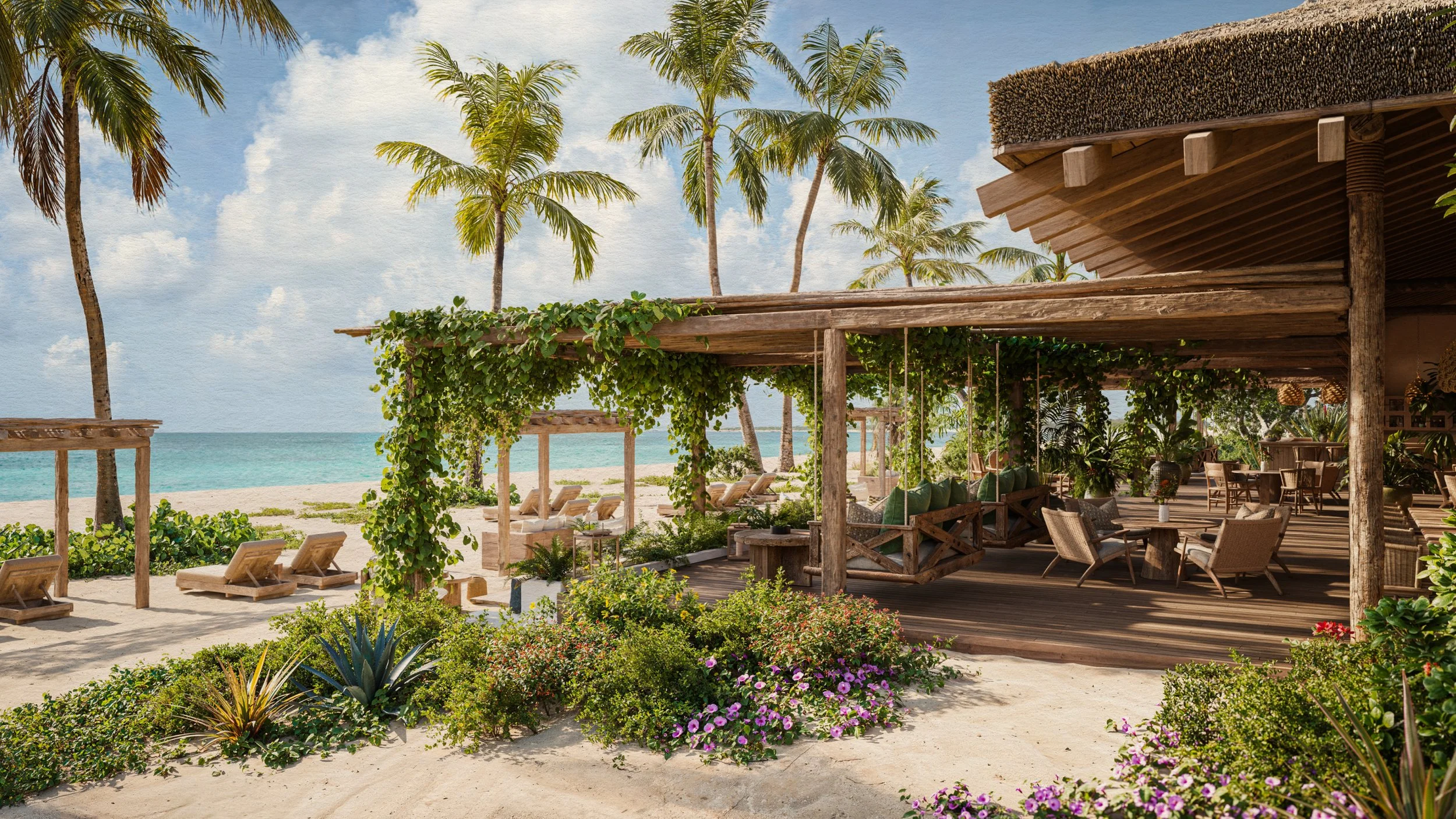
Hassle-free Caribbean living for the super-rich: the Nobu Beach Inn
It certainly makes for an unusually underdressed and soggy way to arrive at a super-prime property viewing. But high-priced as these holiday homes are, this is a place for the barefoot elite, and the low-key luxury ethos continues throughout its design.
They call it a “low-impact, nature-first” resort, with each of the villas “deconstructed, with separate bungalows spread around sandy pathways, so it feels like a mini-resort of its own”, Shamoon explains.
He thinks the project embodies De Niro’s character: “It’s very low-key and subtle. It’s humble. You have all the elements of a luxury resort, but you don’t need to show them off.”
The single-storey hotel properties will be invisible from the shoreline, hidden among dense, lush planting by the marvellously named Miami landscaping supremo Raymond Jungles. “People here – tech moguls, celebrities – want total privacy but the amenities of a resort,” says Shamoon, listing an all-day spa, beach club, swimming pools and tennis courts among the shared attractions.
And when these like-minded souls want to mingle, the laid-back, open-fronted, views-to-the-ocean hotel is the social hub. “Bob refers to the drawing room of the Greenwich Hotel he owns in Manhattan as ‘the clubhouse of Tribeca’ – and this will have a similar private club feel,” Shamoon says.
As for De Niro’s role – well, there’s the obvious one: “Bob brings a lot of guests and potential buyers. He has a big Rolodex,” says Katie Horne, the managing director of Paradise Found Barbuda (the development company behind The Beach Club), although the actor himself won’t be drawn on who he has wined and dined at his island home.
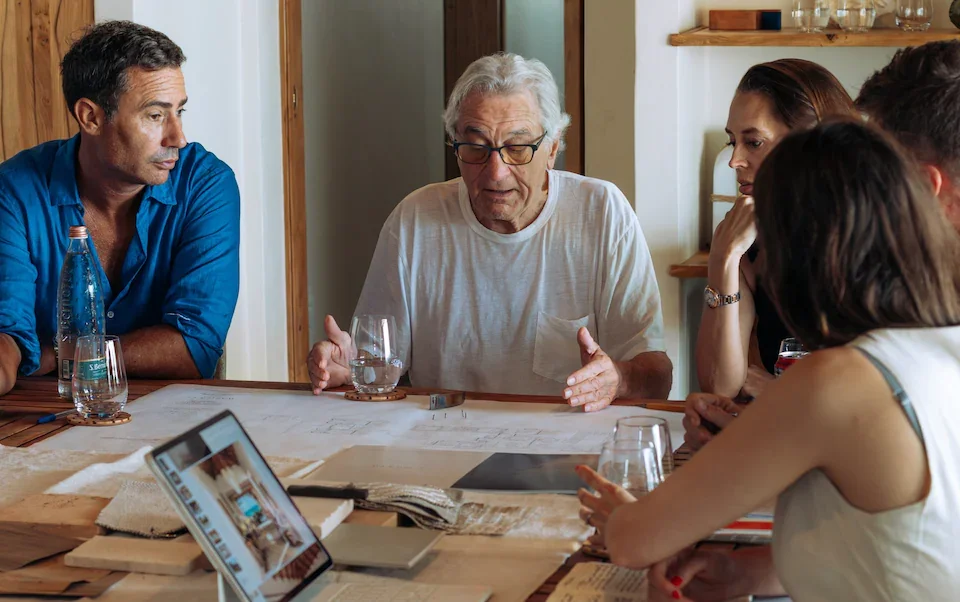
De Niro discusses plans with hotelier Daniel Shamoon
The son of artists, De Niro has a keen eye for design detail too, expressing an opinion on every handmade driftwood table, antique from Bali or bespoke fabric cherry-picked for the properties. Paintings by his father hang in his New York hotel. “I’ve thought about putting my father’s work in Barbuda, but I’m worried about the heat and humidity,” he says, adding that they may commission local Caribbean artists instead.
But he plays down his role, batting away any opportunity for self-aggrandisement. “I don’t know if I’m right, but I know what I don’t like and what I think is not going to work,” he says of his method. “I like to be given choices. Then I can say, ‘I’m not sure about that, I like this.’ Daniel comes in, he brings his experience and his aesthetic. And Katie. We all pitch in. It becomes what it becomes and – he laughs with a hint of nervousness – let’s hope it works. At the end of the day, I’m going to get blamed for it if it doesn’t work, so I’m trying my best to make it work.”
He enjoys going unnoticed on Barbuda. “It’s very quiet. It’s nice. There aren’t many people there. The donkeys come up to me, that’s it.” Although he is perhaps not as under-the-radar as this might suggest, having been given the diplomatic role of special economic envoy of Antigua and Barbuda, by prime minister Gaston Browne.
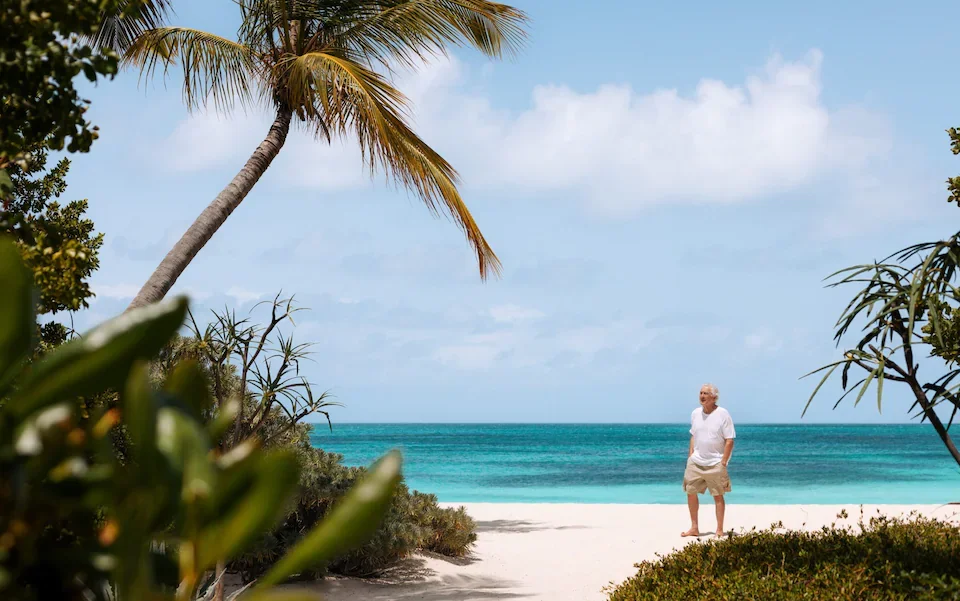
‘It’s very quiet, the donkeys come up to me, that’s it’: De Niro on Barbuda
“Whatever, whatever they want to call me,” De Niro says with a laugh. “Yeah, we’ve met. When I first went down there about 10 years ago, I met everybody.” His opinion carries weight, too. “I said they should seriously consider putting a landing strip on the island. It makes it easier for people who want to come down for a long weekend rather than fly or take a boat from Antigua. And that did happen,” he says of the opening last year of Burton-Nibbs International Airport, whose runway can accommodate private jets and inter-island charters.
Browne has expressed his desire to turn Barbuda into a paradise for the super rich – a “Jumby Bay on steroids”, he has said, referring to the nearby private island whose enormous villa estates cost tens of millions of dollars. But his ambition has stoked controversy among local residents and environmental groups, who accuse him of inviting a land grab by foreign billionaires capitalising on an island that is still in recovery mode.
De Niro rolls his eyes. He’s seen it all before. When he and Packer first acquired the site, he says the local authorities “were concerned we would do something… they wanted it to be handled with care. I said absolutely. That’s the only reason we’d do it”.
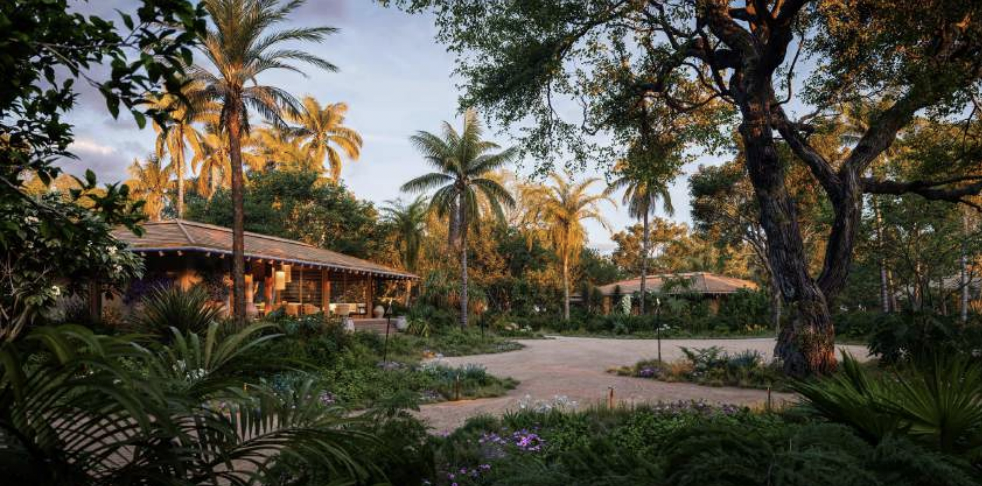
Nobu Beach Inn is now more accessible thanks to a new airport on the island
Where there is money and fame, there are rumours. He’s used to that too. “There was an article written that we were going to create a casino, which is totally ridiculous. People totally believed it. The whole point is to preserve the beauty and the tranquillity. Even building the houses along the coast – you want to recede them so they’re not up and in your face. That’s the whole point of it. It’s a nice, easy place – a refuge for people.”
Barbuda comes with other challenges, including a lack of almost any infrastructure to build and run an entirely off-grid resort. Shamoon chips in: “There’s no central power grid, no water supply. We’ve had to drill wells, build a reverse osmosis plant and water-storage systems and create all basic utilities from scratch, before the first foundation could be poured.”
Skilled labour, too, is in short supply locally, so Nobu Barbuda staff are sent to Shamoon’s Spanish hotels in the off season in order to return fully trained. “The idea, of course, is to get the locals involved as much as we can. That would be ideal. We can hire people and train them, but there are about three jobs per person at the moment,” says De Niro.
“We’re doing everything we can to improve the lives of the population – to give them training and opportunity, especially the younger people, whose options are quite limited,” Shamoon adds. “We’re also incubating small businesses that will grow around the hotel – and the hotel will end up becoming their number-one customer.”
With about 60 Nobu restaurants and 19 hotels globally under his belt, along with his Greenwich Hotel, De Niro is sanguine – if slightly vague – about the inevitable hurdles each new project presents. “Everything I thought would happen, and then some, has happened as far as getting it up and running and blah-blah-blah and all,” he says of The Beach Club Barbuda. But, as he says, “What else am I gonna do? Sit around, play golf or read? Those things I like to do too, but you have to keep moving, you have to keep doing stuff. Then children, and family. That keeps me busy.”
He’s keen to find another real estate project in London, having been granted permission to build a boutique hotel in Covent Garden in 2018 – “but it fell apart,” he says. “It was terrific. We put a lot of work into it. It just didn’t come together.”
He’s still making films too; his latest, a Netflix thriller called The Whisper Man, now in post-production, joins a career of more than 120 films, including his Oscar-winning turns in 1974’s The Godfather Part II and 1980’s Raging Bull, as well as this year’s Honorary Palme d’Or for lifetime achievement at Cannes.
But what makes him proudest? “Oh, well, I’m very happy when things work and people like them,” he says simply. “As far as all the real-estate stuff, and hotels and restaurants… The biggest reward is if people like it and come back.”
And if De Niro knows anything after almost 60 years in the limelight, it’s how to keep them coming back for more.